Calder in Saché

The legendary American artist Alexander Calder (1898–1976) first came to France in 1926, forging a bond with the country that became one of the defining relationships of his life. Nearly three decades later, he discovered the small town of Saché, south of Tours in the Loire Valley, while visiting his friend and future son-in-law Jean Davidson in the summer of 1953. Captivated by Davidson’s unusual home in an old mill astride the Indre River, Calder traded his friend three mobiles in exchange for an abandoned seventeenth-century house built into the limestone hillside known as François Premier. The artist fixed up the house and established workshops for sculpture and gouache painting in repurposed buildings nearby.
Calder and his wife, Louisa, returned to Saché each year until they made it their primary home in the early 1960s. In 1961, Calder was convinced by a visit to the painter Pierre Tal-Coat’s studio in Normandy that he needed a larger working space. Rather than commission an architect, he designed the new building himself, exchanging illustrated letters with Davidson as construction progressed. Completed in 1963 on a nearby hilltop property known as Le Carroi after eighteen months of work, Calder’s new studio embodied a simple and functional aesthetic, featuring stone and striking multistory walls of windows. “He created a well-tempered environment, anchored in the local vernacular but tweaked à la Calder,” writes the architectural historian Robert Melvin Rubin. In 1969, the artist designed a new house beside the studio in the same style.
-
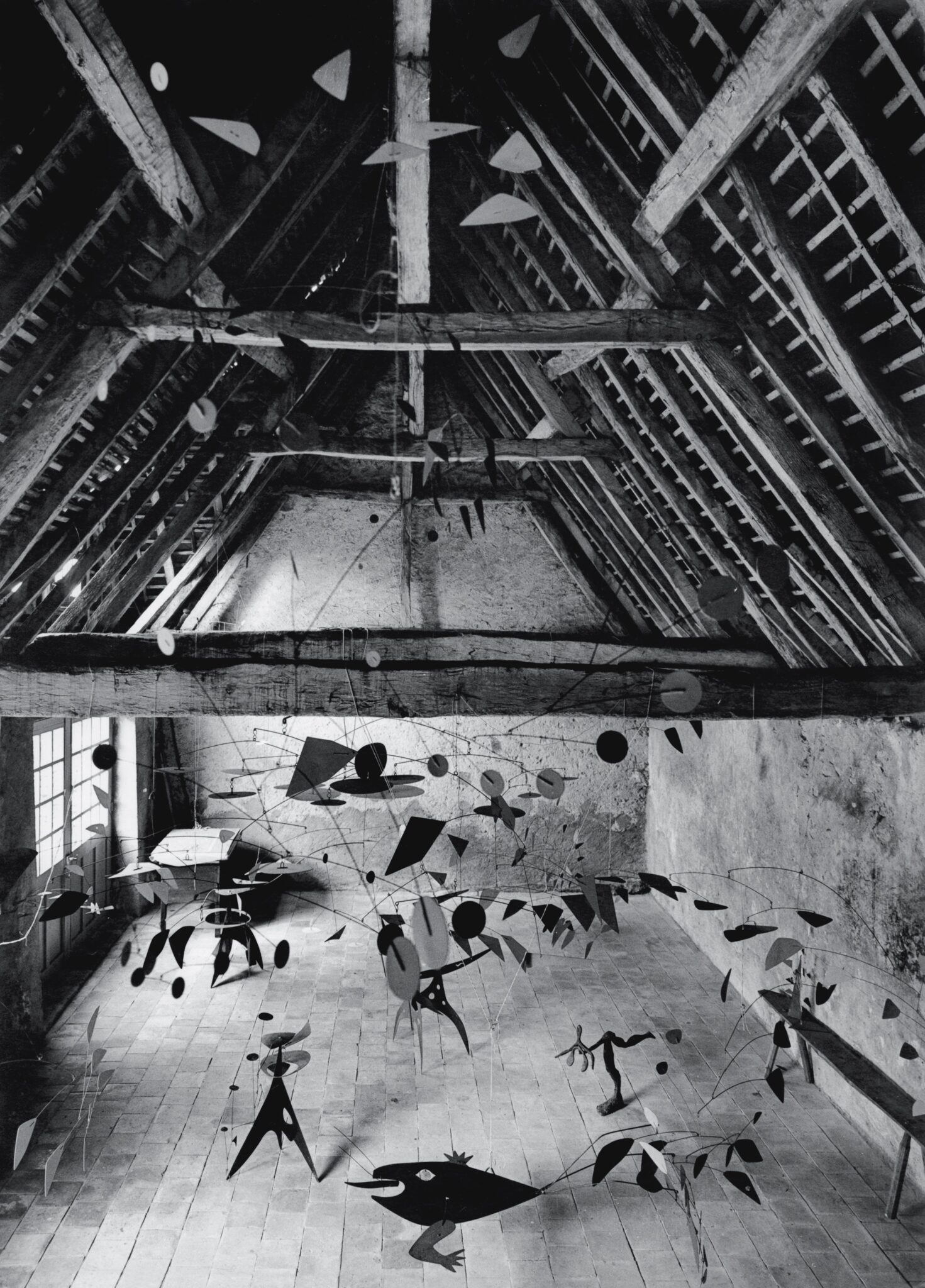
Haikaller (1957), Blue Feather (c. 1948), Red, White and Blue, on Black (1948), Red Lily Pads (1956), Snow Flurry (1948), Sword Plant (1947) and Dancer (1944), Saché, 1963. Photograph by Ugo Mulas © Ugo Mulas Heirs -
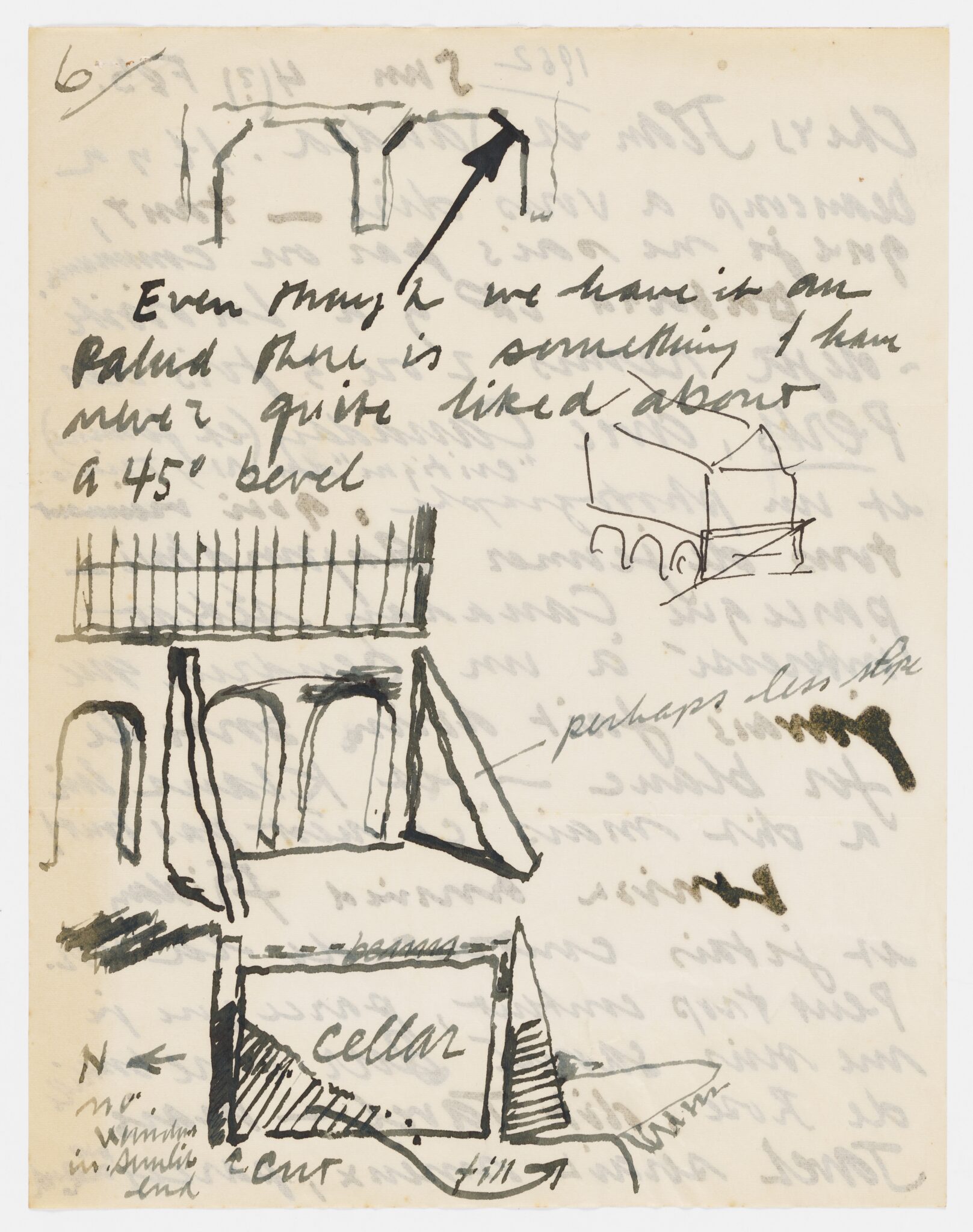
Letter from Calder to Sandra and Jean Davidson, 4 February 1962 -
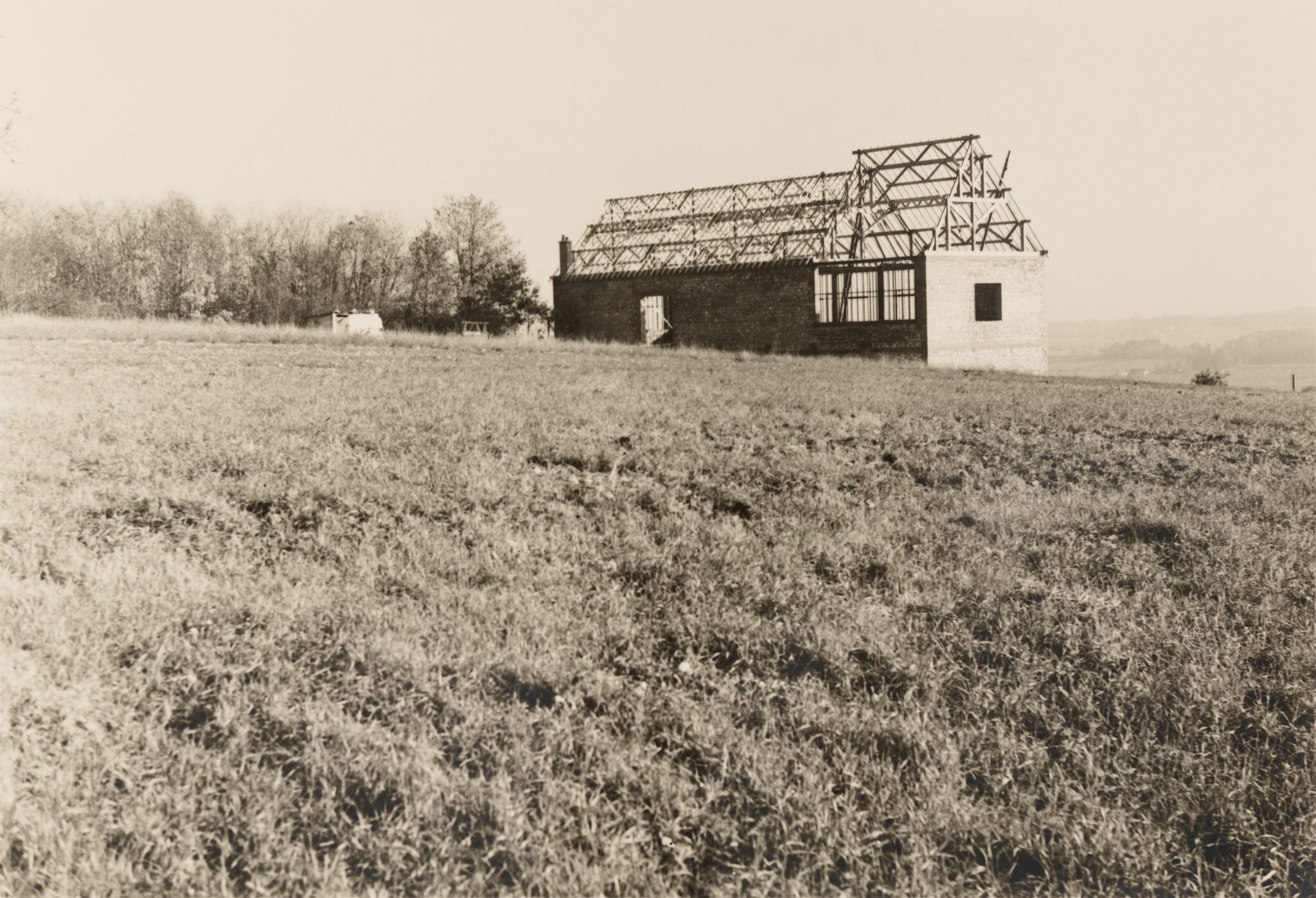
Construction of the Le Carroi studio, Saché, 1963 -
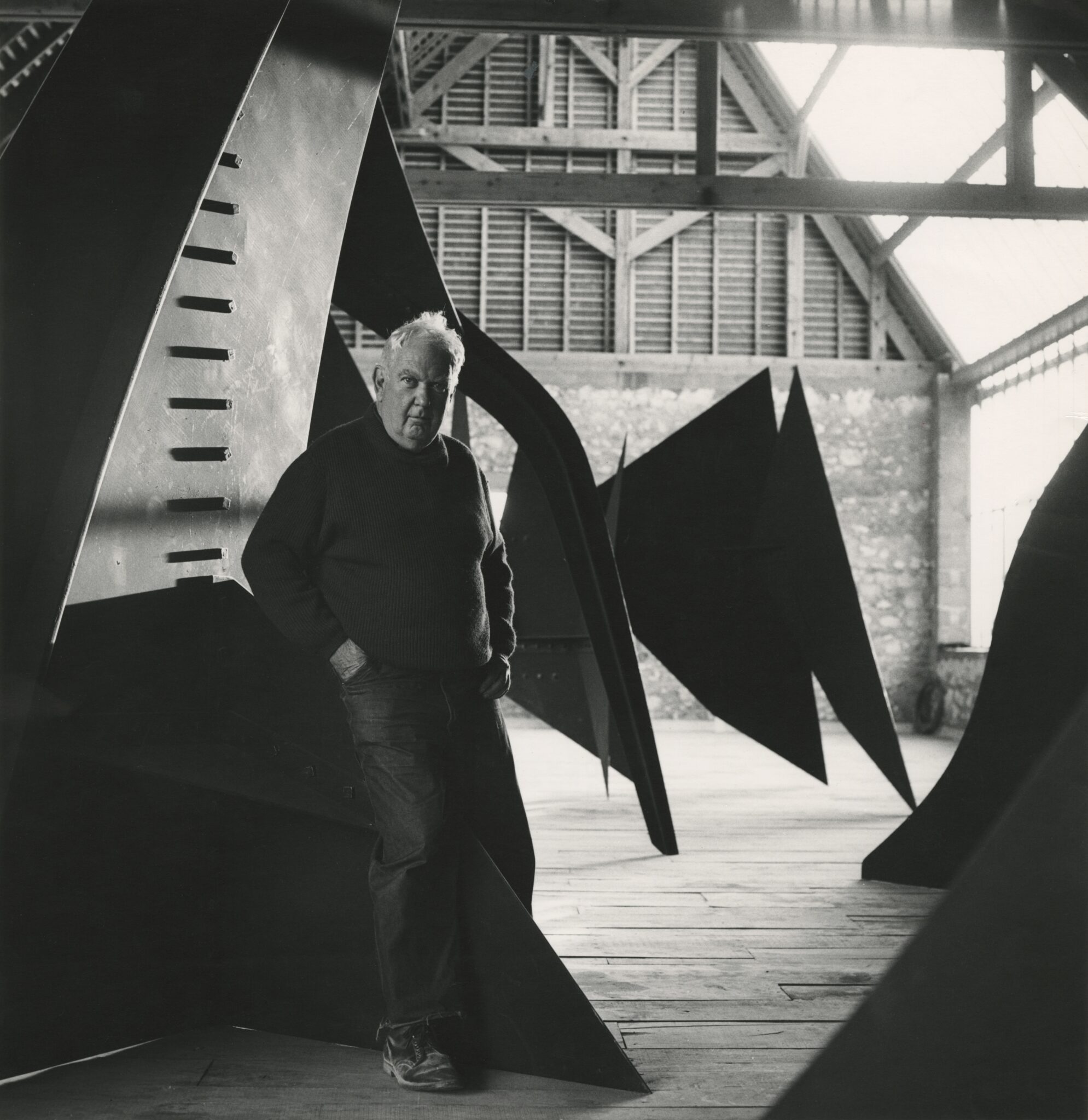
Calder in his Le Carroi studio, 1963. Photograph by Ugo Mulas © Ugo Mulas Heirs -
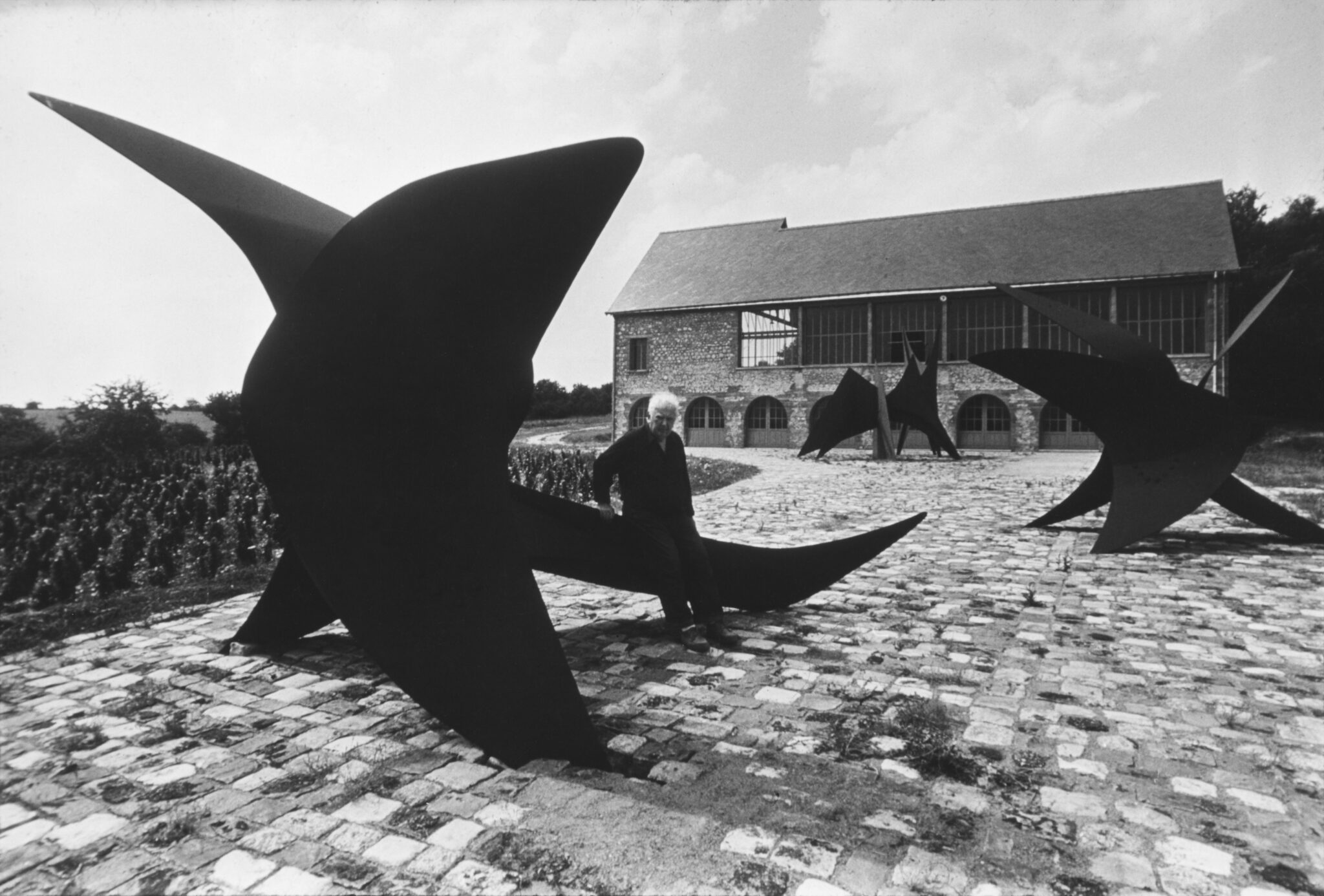
Calder with Le Faucon (1963), Les Trois ailes (1963), and Triangles and Arches (1965) outside the Le Carroi studio, Saché, 1967. Photograph by Tony Vaccaro/Tony Vaccaro Studio © Tony Vaccaro -
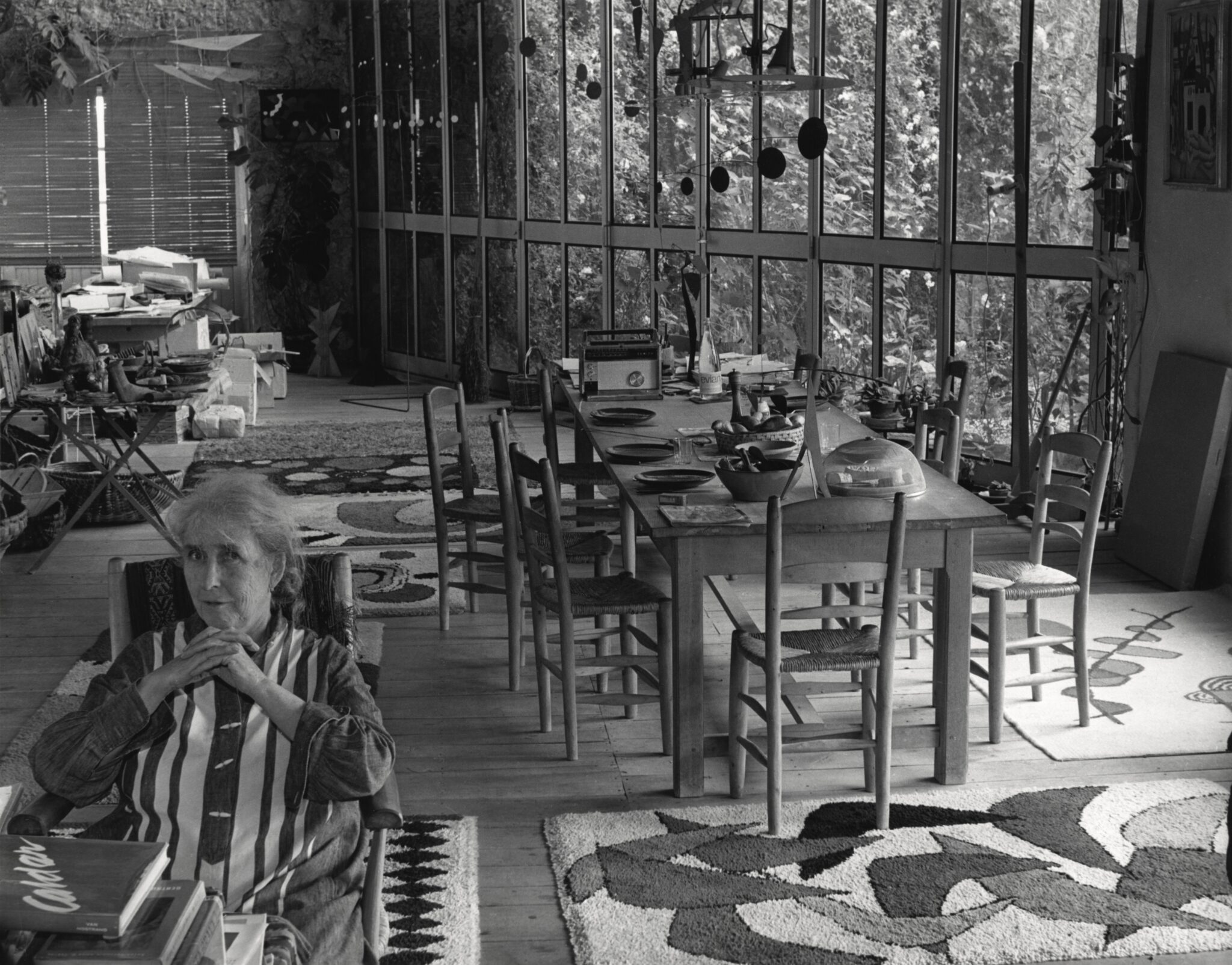
Louisa Calder in the Le Carroi house, Saché, 1976. Photograph by Pedro Guerrero © Pedro Guerrero -
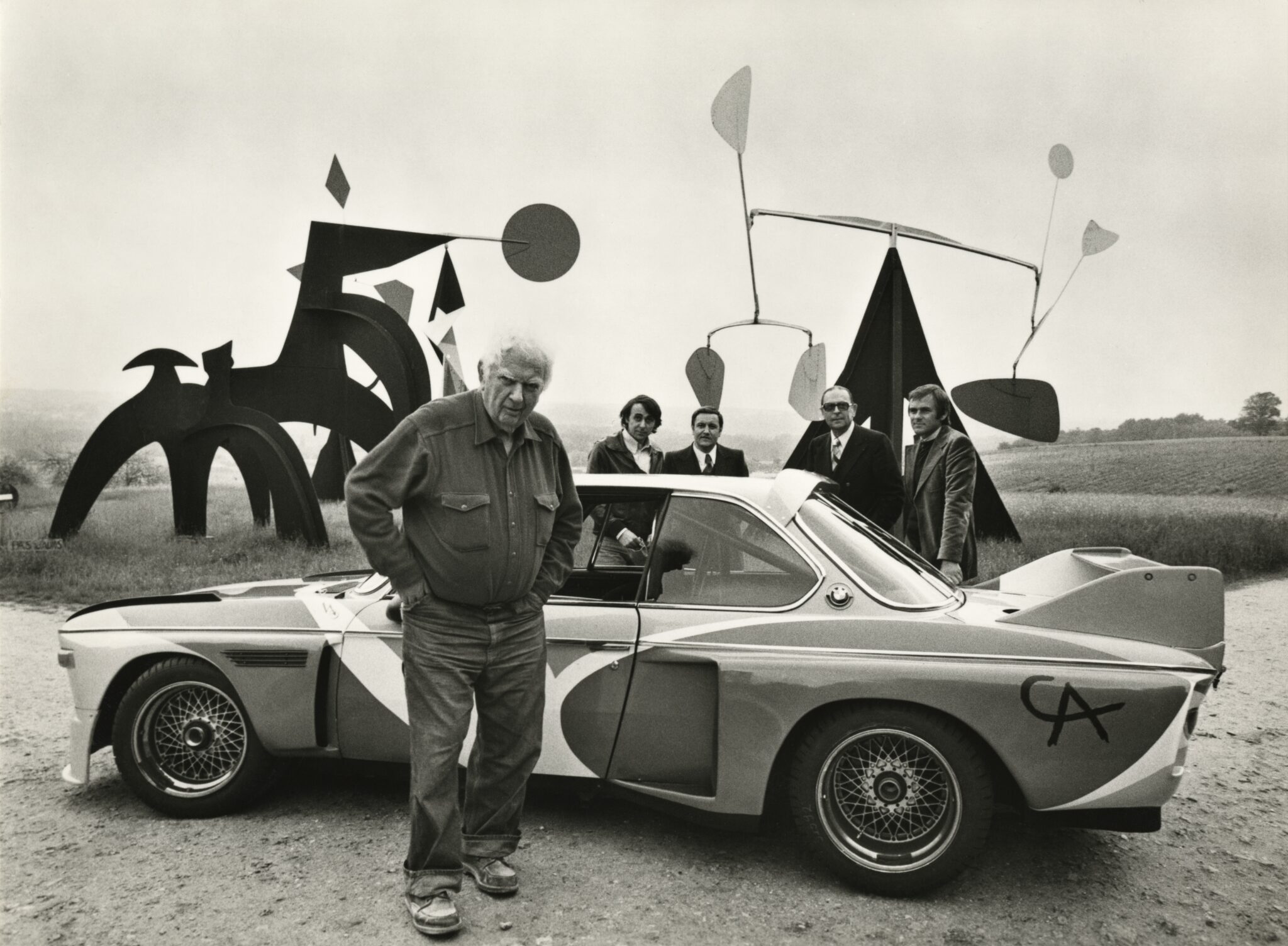
Calder in front of his BMW Art Car with Hervé Poulain, Jean Marie Curien, Jean Louis Maesen, and Jochen Neerpasch, Saché, 1975. Photograph by Jean-Marie Bottequin -
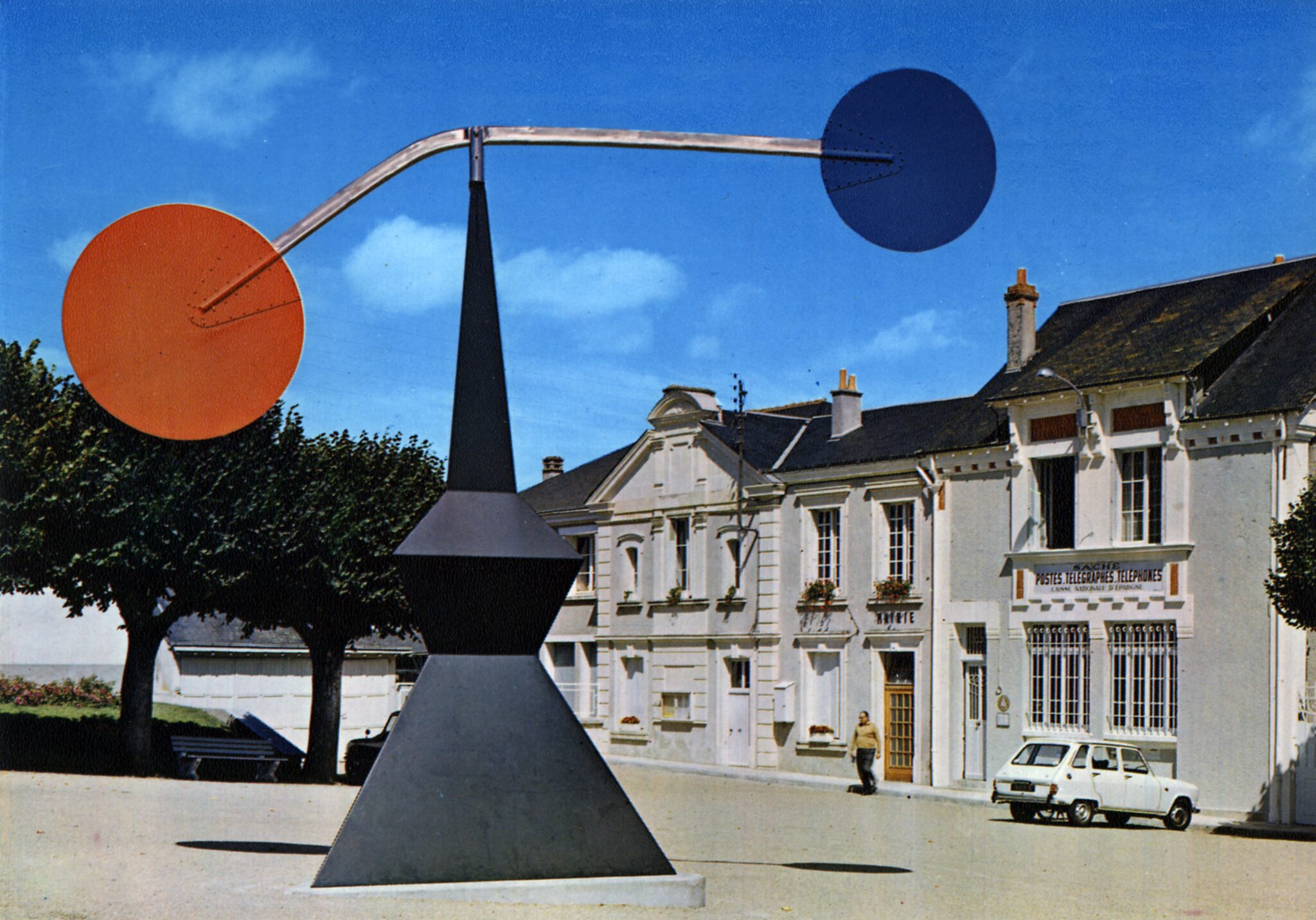
Postcard of Totem-Saché (1974) in the town of Saché, c. 1974


Calder used the Le Carroi studio’s vast interior—illuminated by generous north light and opening directly onto the landscape—primarily as a place to contemplate and review the monumental sculptures that dominated his practice in the last decades of his life. When the author James Jones visited Saché, Calder brought him up to see a new group of large, black stabiles in the freshly completed studio. “In the gloom and moonlight I had the impression the future was finally falling in on me, as I have often dreamed it will someday,” Jones wrote of the experience. “Behind me I heard my wife gasp. Soaring, looming black shapes and streaks circled and dived on me from above and on all sides.”
The Calders became fixtures of the community during their decades in Saché. They supported local initiatives, developed relationships with generations of residents, and left an enduring mark on the region that extends beyond the sculptures Calder created there. Since 1989, Atelier Calder has continued this spirit by welcoming artists from around the world to live and work at Le Carroi, ensuring that the house and studio remain a place of creation, experimentation, and exchange.